Why Good Projects Stall: Money, Doubt and the Two Dips
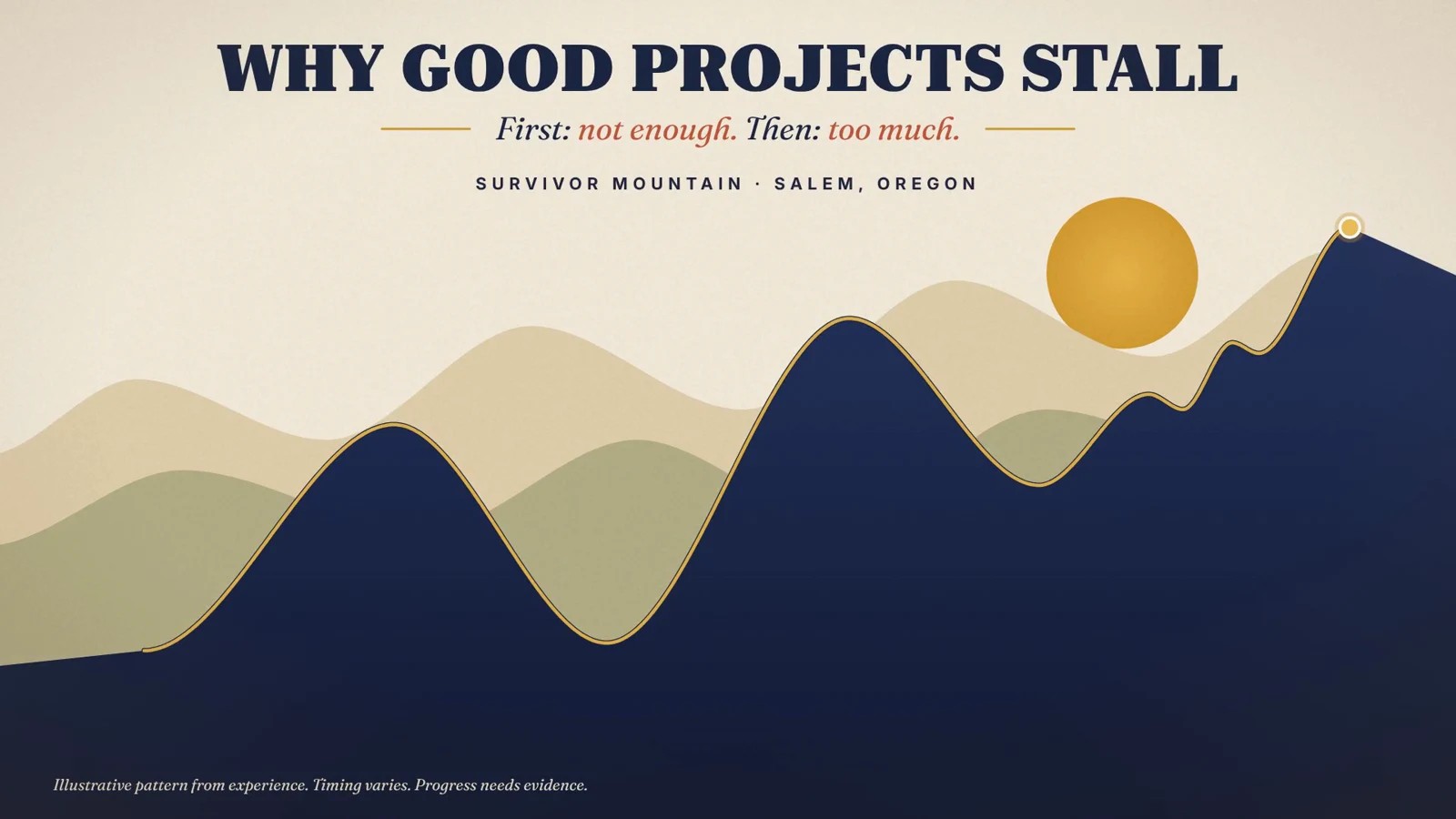
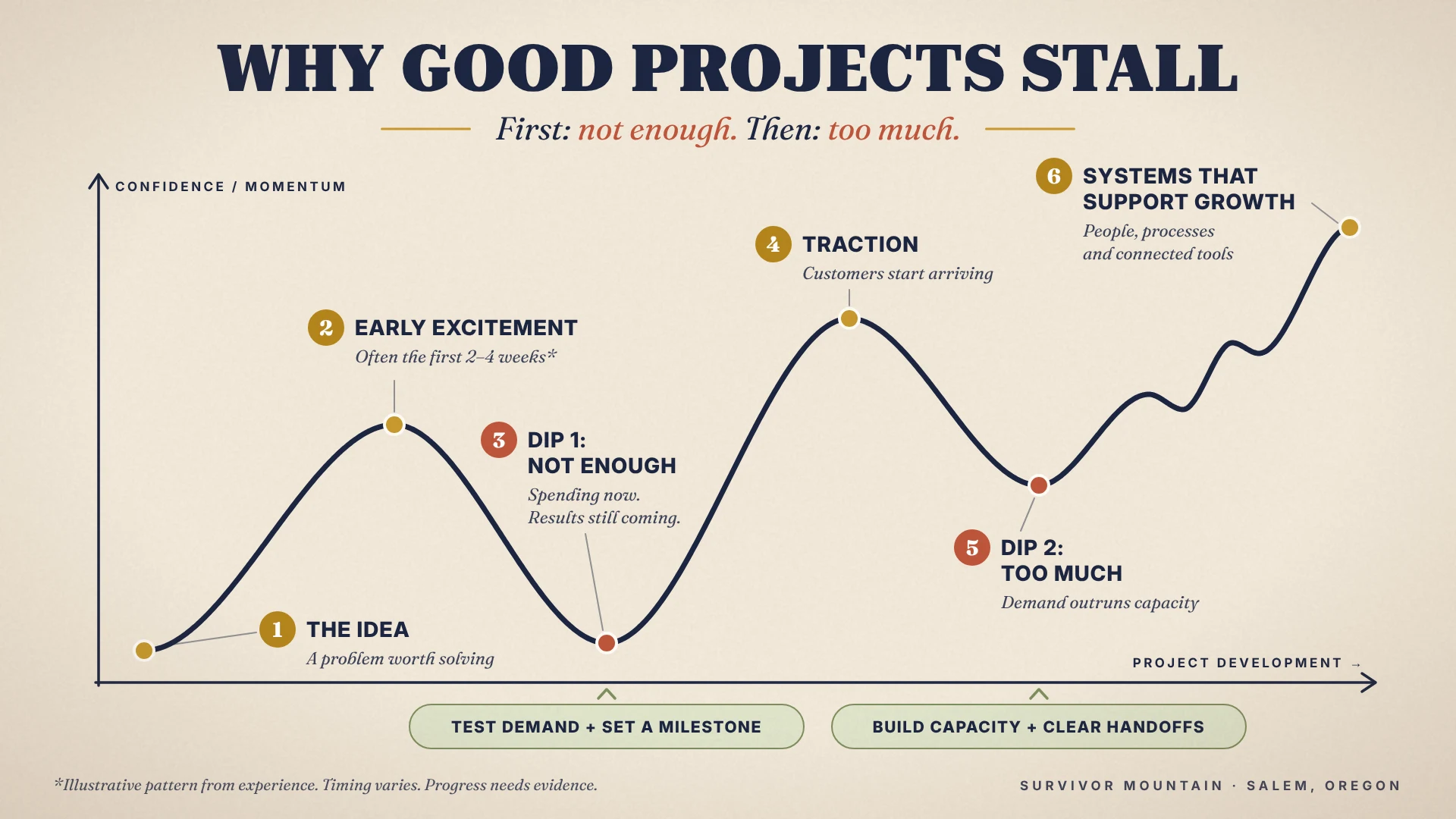
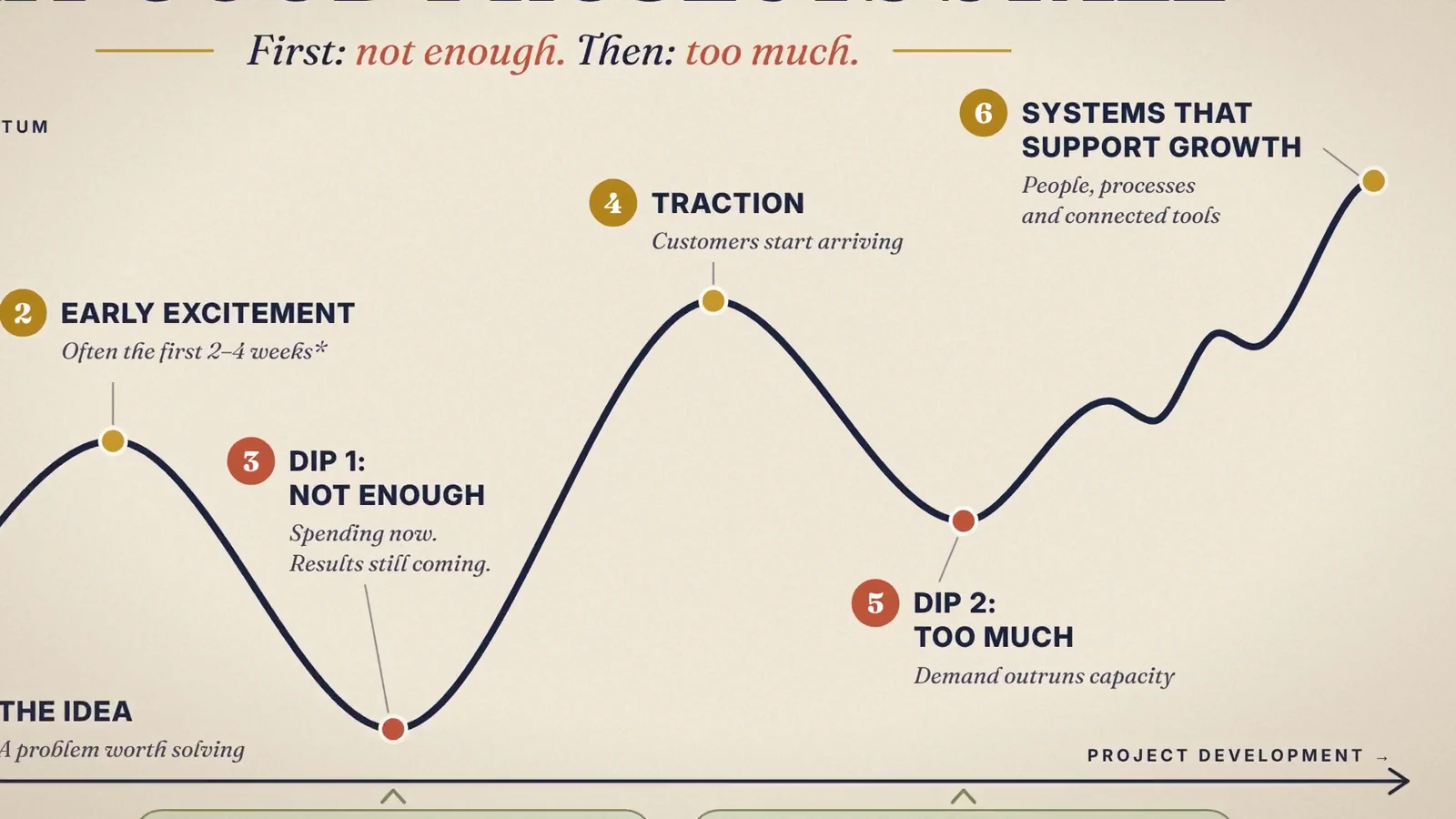
First, the worry is: “We’re spending money, but nothing is coming back.” Later, it can become: “This is working, but we can’t keep up.”
I see these two pressure points in business development, websites, AI projects and the systems that connect a company together. A good idea gets started. Everyone can see the possibilities. Then the work gets harder, the bills become real, and confidence drops before the benefit has had time to catch up.
That is a difficult place to make a good decision. Especially when one person can see the future clearly and the rest of the business is still trying to get through today.
Understanding the pattern gives us a better conversation: Where are we, what evidence do we have, and what does the next stage actually need?
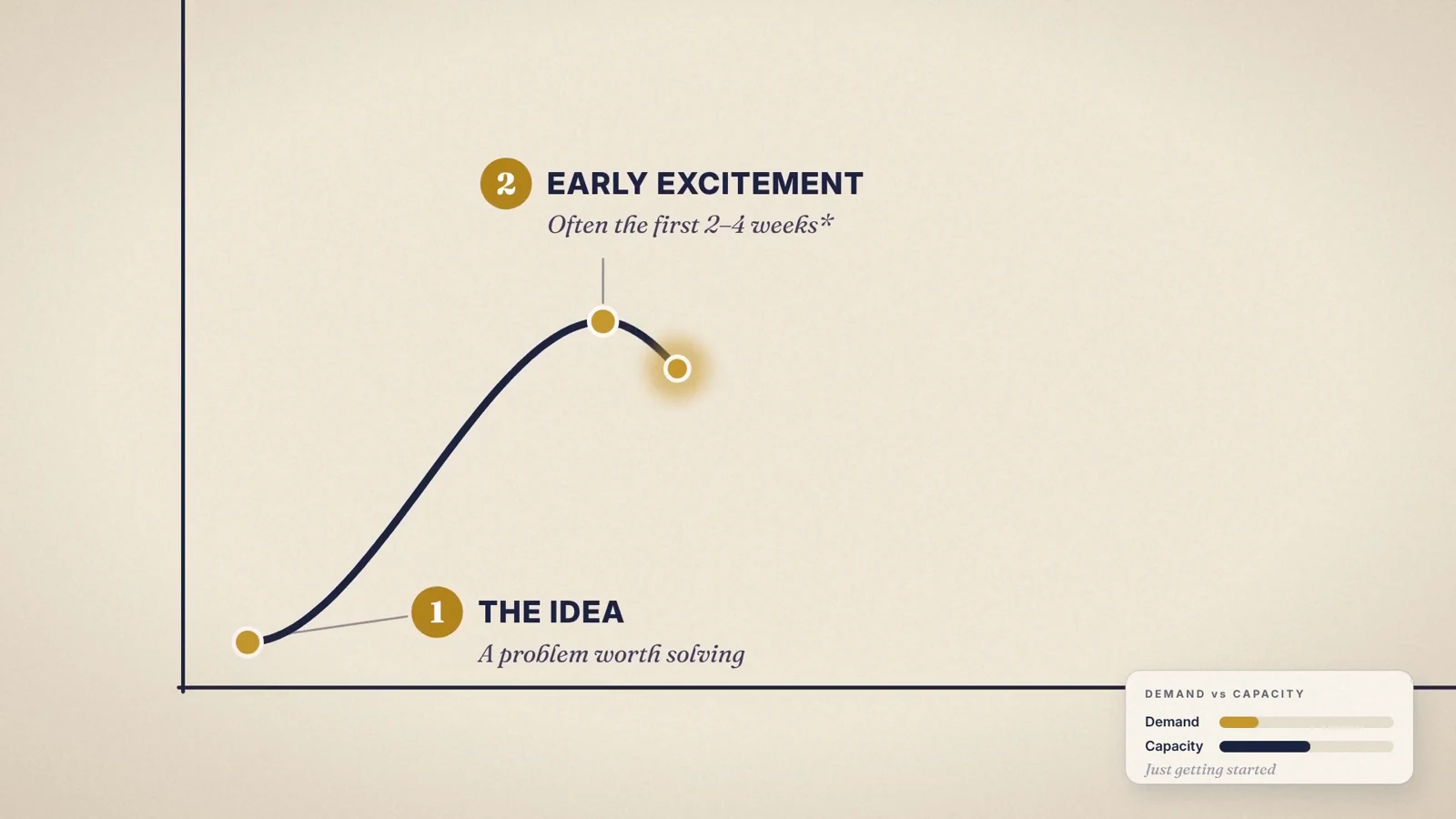
1. The beginning feels good
Those first few weeks feel good. A new page appears. A prototype works. An AI tool produces something useful. An idea that lived in someone’s head is finally something the team can see.
Those are real achievements. But a working demonstration and a dependable business process are different milestones. The next work is often less visible: testing awkward cases, connecting records, explaining the offer, following up with prospects, training people and deciding who owns what.
The project may still be moving while the feeling of progress slows down.
2. Money is going out. Doubt starts creeping in.
In my experience, the doubt often starts in the first 2–8 weeks. The bigger results can take 3–6 months. You’ve paid for the work, your team is putting time into it, and someone asks, “What have we actually got out of this?”
Invoices, staff time, learning and changes. “Shouldn’t this be working by now?”
Customers make decisions. The team gets used to the system. Jobs start moving more smoothly.
The uncomfortable part is the space between those two experiences. You are paying now. You can see the time being spent. What you hoped to gain is still uncertain.
Economists describe a related problem in the Productivity J-Curve. New technology needs investment around it before the benefits show up. That fits what I see in practice: getting the software working is one job; getting it working well inside the business takes more work.
For a sales project, a website going live is the start of a route to customers. People still need to discover it, understand it, trust it and make a decision. For an internal AI project, staff still need to use it reliably, handle exceptions and stop duplicating the old process.
You should still be able to see progress along the way. What have we finished? Who is using it? What is getting easier? What needs fixing? Those are questions we should be answering every week.
3. This is a human problem as well as a technical one
The invoice is sitting in front of you. The future customer isn’t. It’s easy to focus on what’s going out and start doubting what you were so excited about a few weeks ago.
Kahneman and Tversky’s research on decisions under risk helps explain that reaction: losses can weigh more heavily than gains. In a project, the spending is happening now, while the return is still something you’re hoping for.
There are everyday pressures too. People are learning while still doing their normal jobs. A familiar workaround can feel safer than a new process. A team member may worry about making mistakes, losing control of their work or being judged against an unfamiliar system.
Before calling that resistance, ask what is making the change difficult. People may need someone to show them how it works, time to practise, or one less job on their plate while they learn.
4. One visionary can start it. The business has to learn to run it.
The owner or project champion may have spent months imagining the improvement before anyone else heard about it. They can see the whole picture: fewer interruptions, a stronger customer experience, better information and room to grow.
The rest of the company may have heard a short explanation and received another task. The visionary is looking at the future; the team is dealing with the extra work required to get there.
“This could change how the whole business works.”
“What changes for me, what can I stop doing, and who helps when it goes wrong?”
That gap becomes dangerous when every decision, reminder and exception flows back through the same person. The champion becomes the engine, the translator and the help desk. When they get tired or busy, progress slows.
Prosci’s ADKAR model is useful here: people need to understand the change, want to take part, learn how to do it and get enough practice to keep doing it. Kotter’s approach also puts a group around the leader and makes early wins visible.
Bring the people doing the work into the project early. Give someone responsibility for running the new process. Show the team a real job going through it from start to finish. Let them try it, listen to what gets in their way, and agree when they can stop doing the same job twice.
The project gets stronger when the team helps build the way it will work.
5. Starting over can repeat the same first chapter
A new supplier, new tool or new project can bring the excitement back. Sometimes that change is necessary. But if the unresolved problem is adoption, follow-through or testing demand, a fresh start can lead to the same dip a few weeks later.
Before throwing the work away, separate what is useful from what is missing. Keep the code, documents, customer feedback and working connections. Identify whether the next gap can be closed without rebuilding everything.
Look at what the next step will achieve and what it will cost. If the offer needs changing, change it. If the team needs help, give them that help. If there’s no demand, find that out before building more.
6. Traction changes the problem
Eventually, a useful project may begin earning its place. Enquiries arrive. Orders move forward. Staff use the new process without being chased. The business starts feeling the benefit.
Then another pressure point can appear. The phone rings while someone is answering email. A delivery changes. Customer notes are spread across inboxes. The person who knows where everything belongs is already overloaded.
First the worry was “not enough.” Now it is “too much.”
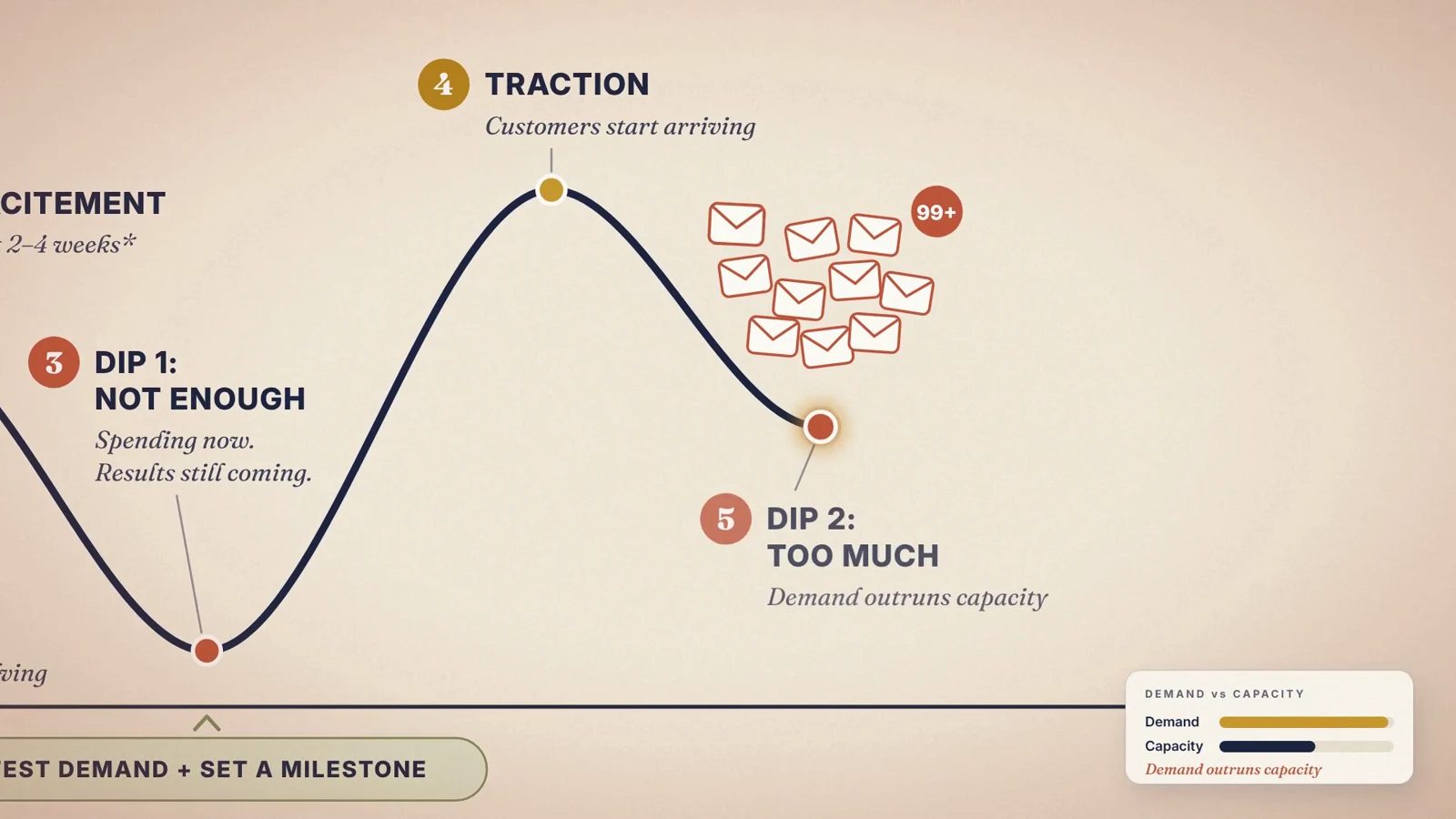
A successful AI trial can encounter the same issue internally. More staff want access. More exceptions appear. Someone needs to manage permissions, check quality and answer questions. A useful pilot now needs support around it.
The next step might be a shared job board, a support queue, connected customer records, clearer scheduling or a mobile app for field staff. The aim is practical: each request has an owner, its status is visible, and the team knows what happens next.
Small companies can build capabilities that once felt reserved for large companies. That does not require buying every system at once. Build the part that removes the next real bottleneck.
7. Each improvement has its own smaller cycle
A new iPhone app still needs testing and training. An AI assistant still needs suitable source material and human checks. An integration still needs a plan for missing or incorrect information.
Give each improvement a small finish line: one useful job, a named owner, a measure of success and a review point. That lets the wider business develop without turning every idea into an open-ended commitment.
A useful conversation for your next project meeting
If the project feels stuck, put the curve on the screen and work through these questions together. Leave the meeting knowing what happens next and who is doing it.
- Which problem are we facing? Waiting for demand, struggling with adoption, a technical fault, or too much work for the current process?
- What evidence has changed? Show completed work, real usage, customer feedback, qualified enquiries, task time, errors or rework. Separate activity from benefit.
- Who owns the next step? Name the sponsor, the person running the process and the people testing it. Include someone who has raised a practical concern.
- What will we prove next? Agree one small outcome, its cost and a review date. If the expected benefit is months away, agree what useful evidence should appear sooner.
- What would make us change or stop? Write down the limits before the next invoice arrives.
The need is real, usage or demand is improving, and the next test is affordable.
The need is real, but scope, adoption, reliability or the offer is getting in the way.
There is no credible demand, the economics do not work, or the remaining cost is unjustifiable.
Excitement gets a project started. After that, people need to see progress, know their part and finish the next piece of work. That is how you get through the dip.
Make the next step clear.
I’m Paul, from Survivor Mountain in Salem, Oregon. I help businesses turn unfinished ideas, repeated work and fragile handoffs into systems people can actually use.
If you are in one of these dips, we can look at what you already have, where the work is getting stuck and what would make the next step worthwhile.
Talk to Paul about your projectStart with our practical AI guide · Explore the business review and first-project package
Research and further reading
- Brynjolfsson, Rock and Syverson (2021), The Productivity J-Curve: How Intangibles Complement General Purpose Technologies, American Economic Journal: Macroeconomics.
- Kahneman and Tversky (1979), Prospect Theory: An Analysis of Decision under Risk, Econometrica. Author paper hosted by MIT.
- Prosci, The ADKAR Model: the individual side of adopting change.
- Kotter, The 8-Step Process for Leading Change: shared leadership, removing barriers and early wins.
Related reads
Where Should a Small Business Start with AI?
Start with one job that keeps taking your time. A practical guide to choosing a useful first AI project, checking its work and deciding whether it earns its place.
When Staff Become the Link Between Orders and QuickBooks
An anonymous client story about connecting online orders, payment handling and QuickBooks, and removing a handoff that depended on family members.
What Happens When the Only Person Who Knows How It Works Is Away?
A practical starting point for family businesses: choose one recurring job, make the handoff clear and help someone else complete it without ringing the owner.
Want to talk about how this could work for your business?
Let's Chat